Why does my G chord buzz?
Check the low E, A, and high E strings separately. One fingertip is usually too far from the fret or touching the next string.
Quick answer
A buzzing G chord usually needs a fingertip moved closer behind its fret. Pick each string alone, find the buzz, then adjust only the finger responsible.
- Check low E at fret 3
- Check A at fret 2
- Keep the high E fingertip close behind fret 3
Real G chord hand shape
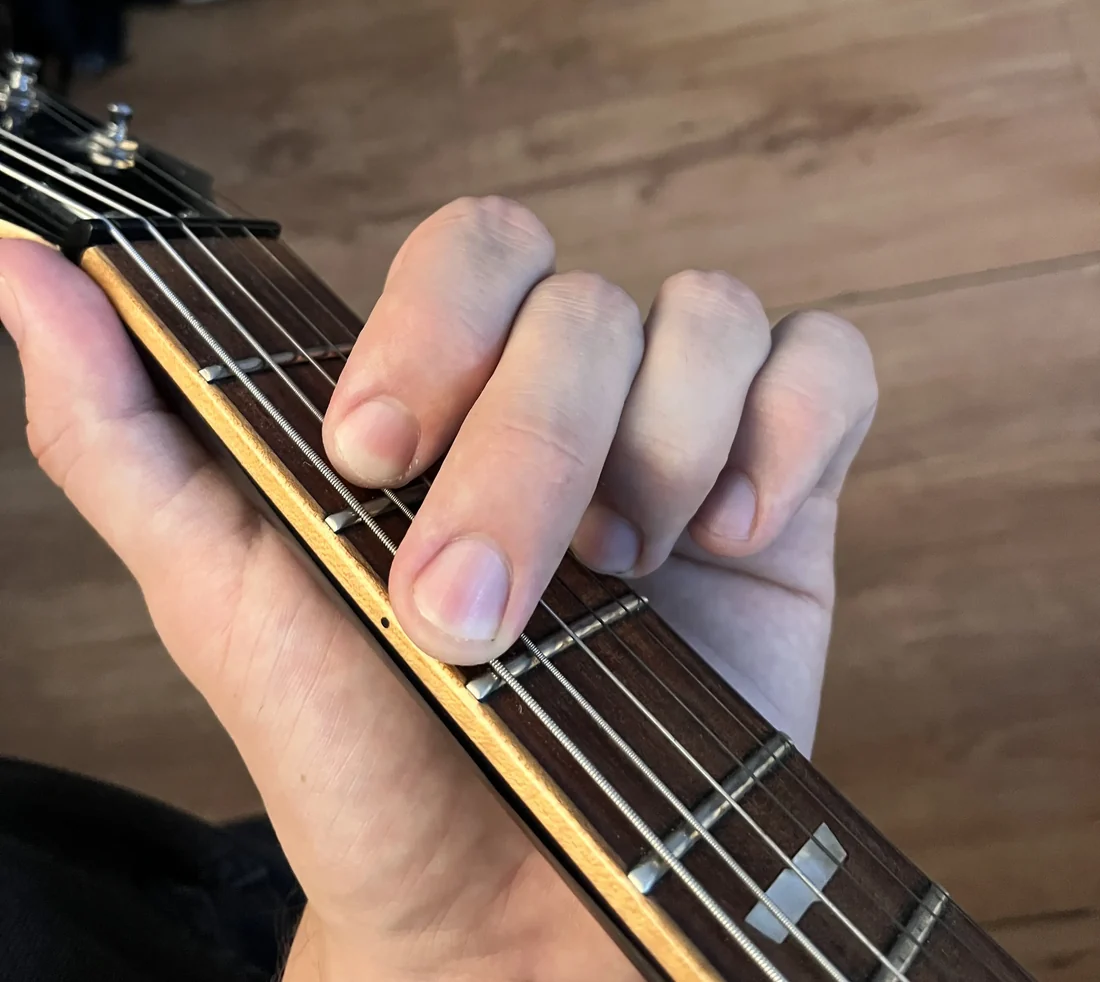
A big shape needs relaxed reach
G spreads the hand across the neck. If the palm crowds the neck or the thumb squeezes, the fingertips flatten and buzzing becomes more likely.
Low E buzz
Move the middle fingertip close behind fret 3.
A string buzz
Use the index fingertip at fret 2 without leaning into D.
High E buzz
Place the ring fingertip close behind fret 3 and relax the wrist.
Several strings buzz
Check posture and thumb pressure before squeezing harder.
Step by step
1. Pick each string
Name the exact string that buzzes.
2. Move closer to the fret
Place that fingertip just behind the metal line, not on top of it.
3. Relax the thumb
Let the thumb support the neck without crushing it.
4. Retest the full chord
Strum only after each individual string rings.
Repair one string, not the whole grip
Pick all six strings separately. Keep every finger that already works in place and move only the finger causing the buzz.
Useful next pages
Common questions
Why does the low E string buzz in a G chord?
The fingertip is often too far behind fret 3. Move it close behind the fret and keep the finger curved.
Should I press harder to fix a buzzing G chord?
Move closer to the fret first. Extra force creates tension and may pull the note sharp.