How to change from G to D on guitar
Shrink the hand from the wide G shape into D's small triangle and aim before the next strum.
Quick answer
To change from G to D, release the wide G shape, keep the fingers close, form the small D triangle on the top three strings, and strum from the D string.
- D uses only the top four strings
- Build the triangle before strumming
- Keep the hand close during the move
Compare the G and D hand shapes
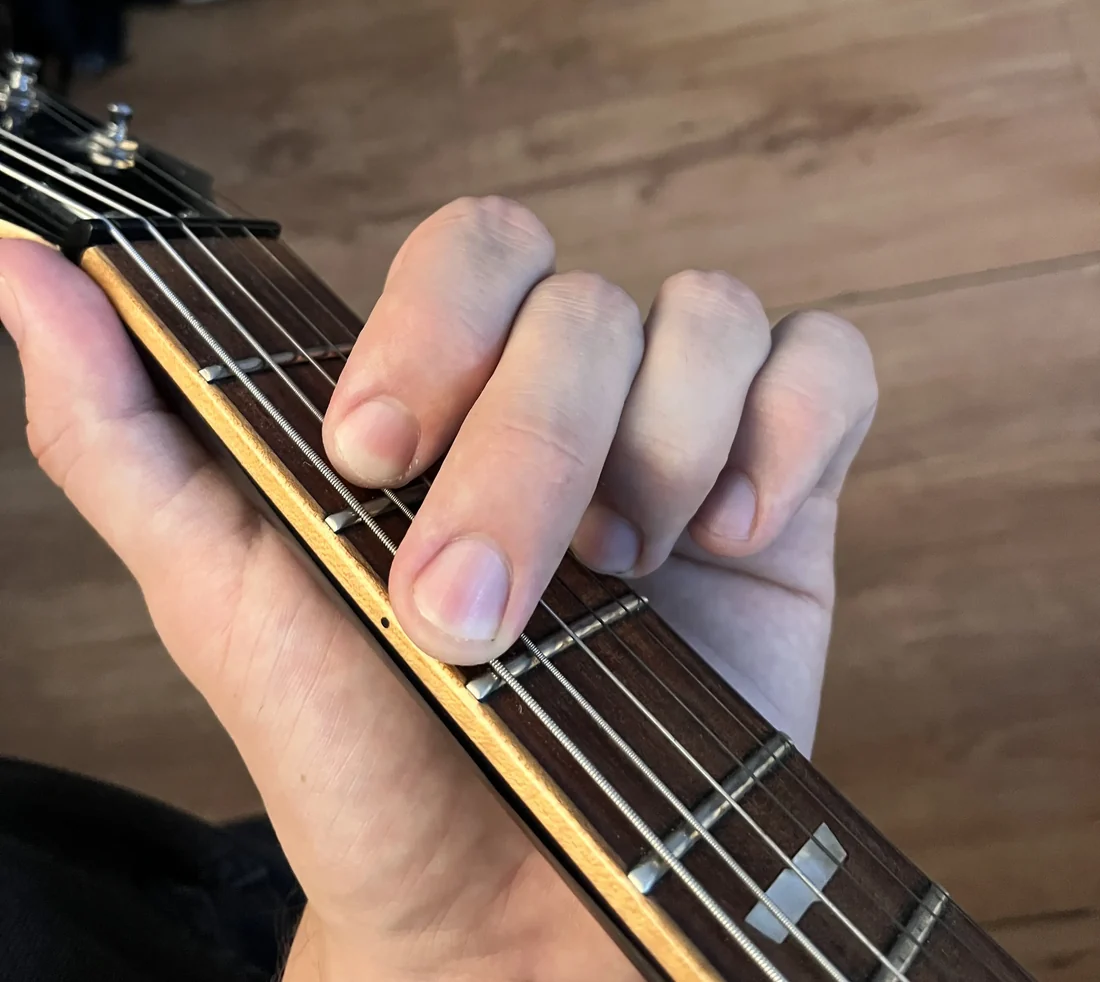
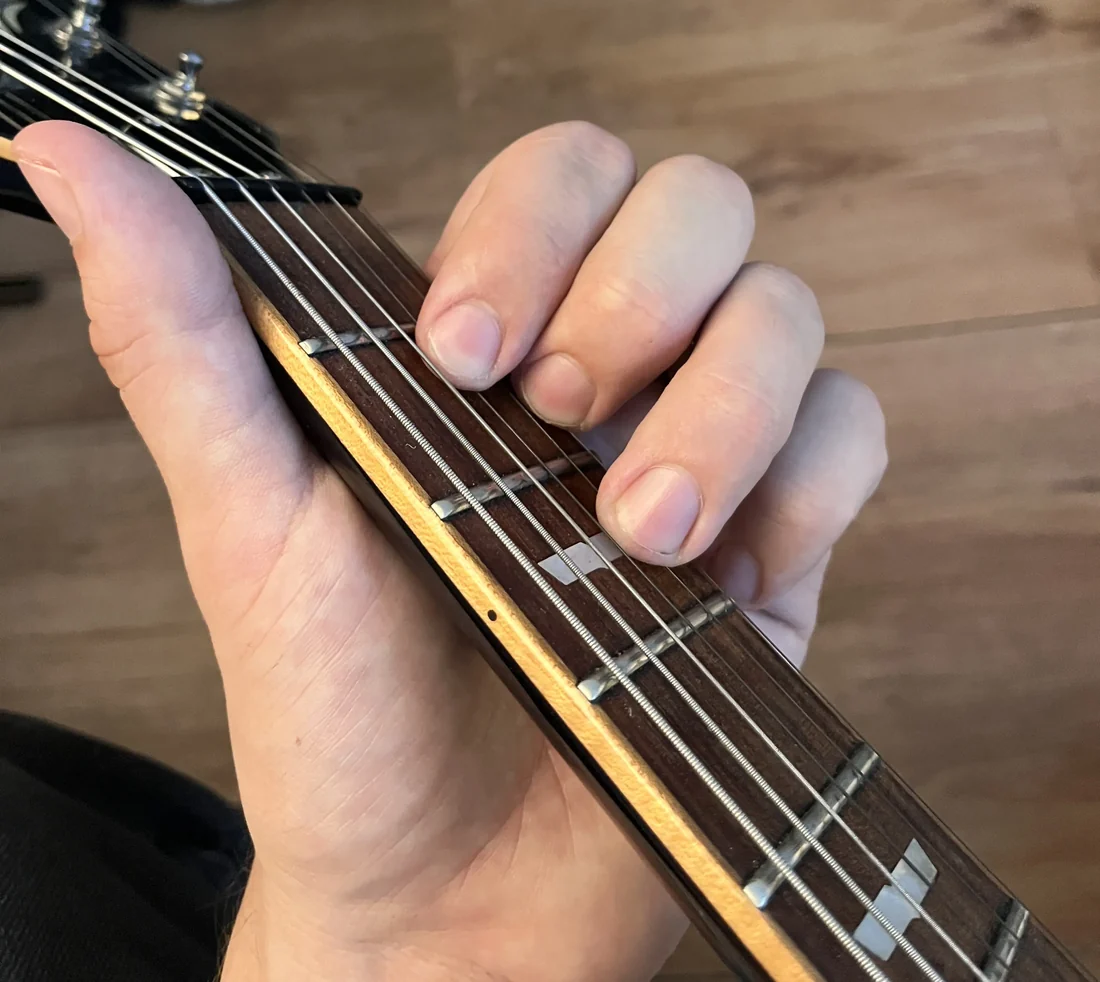
Change the size of the target
G spans the full neck, while D lives on the thinnest four strings. The hand must move inward as well as change finger shape.
Release G
Relax finger pressure before moving.
Find D's triangle
Index on G fret 2, ring on B fret 3, middle on high E fret 2.
Keep fingers close
A smaller movement gives the hand less distance to recover.
Strum from D
Avoid the low E and A strings in the standard D shape.
Step by step
1. Strum G once
Make sure the starting chord is clean.
2. Move toward the thin strings
Let the whole hand shift inward without lifting far away.
3. Land the D triangle
Place the three fingertips close behind frets 2 and 3.
4. Strum from the D string
Count the change only when the four intended strings ring.
5. Repeat for one minute
Use the saved clean score as your personal baseline.
Aim the strumming hand too
A clean D starts from the open D string. Practise the fretting move and the smaller strumming target together.
Useful next pages
Common questions
Why does my D chord sound weak after G?
The hand may arrive late or the strum may still hit all six strings. Build the D triangle first and strum from the D string.
Can one finger stay down between G and D?
With the beginner fingerings used here, the fingers change jobs. Keep them close to the strings rather than forcing an anchor that does not fit your shapes.